
Is Your Portfolio Rightsized Or Potentially Capsized?
So far in November, zig-zag markets have been absorbing waves of powerful news. First, a crisis-aversion post elections rally. Then markets immediately u-turned on fears of curtailed AI data center buildouts but that was quickly followed by a relief rally on solid employment data.
These powerful and rapid waves of information can confuse, frustrate and paralyze investors especially those waiting for an all clear for calmer investing seas. That signal simply never comes. What investors can do however in these whipsawing conditions is analyze and understand what lies below the surface of their portfolios to determine if they are appropriately balanced.
Investor & Boater Beware
In boating, knowing the importance of stability can mean all the difference between a successful outing and a doomed voyage. Loading too much cargo and passengers in an area of the boat can jeopardize stability. Since bad weather and strong currents can result in capsizing, boaters must assess weight and placement to ensure a successful journey.
Like with boating, knowing a portfolio’s investment allocations and weightings is critical to understand how the portfolio reacts to waves of negative and positive headlines, shifting market tides and performance longer term. Along with the recent multiyear market move higher has been a market leadership reversal from growth to value investing that may surprise investors.
As the chart below shows, over the last few years, the value stock side of the market has rallied while growth stocks have declined or lagged behind. There have been multiple rotations between growth and value styles over the years but given the media’s incessant focus on high profile growth (technology) companies, many investors may not be aware of the changing style tides beneath the market.
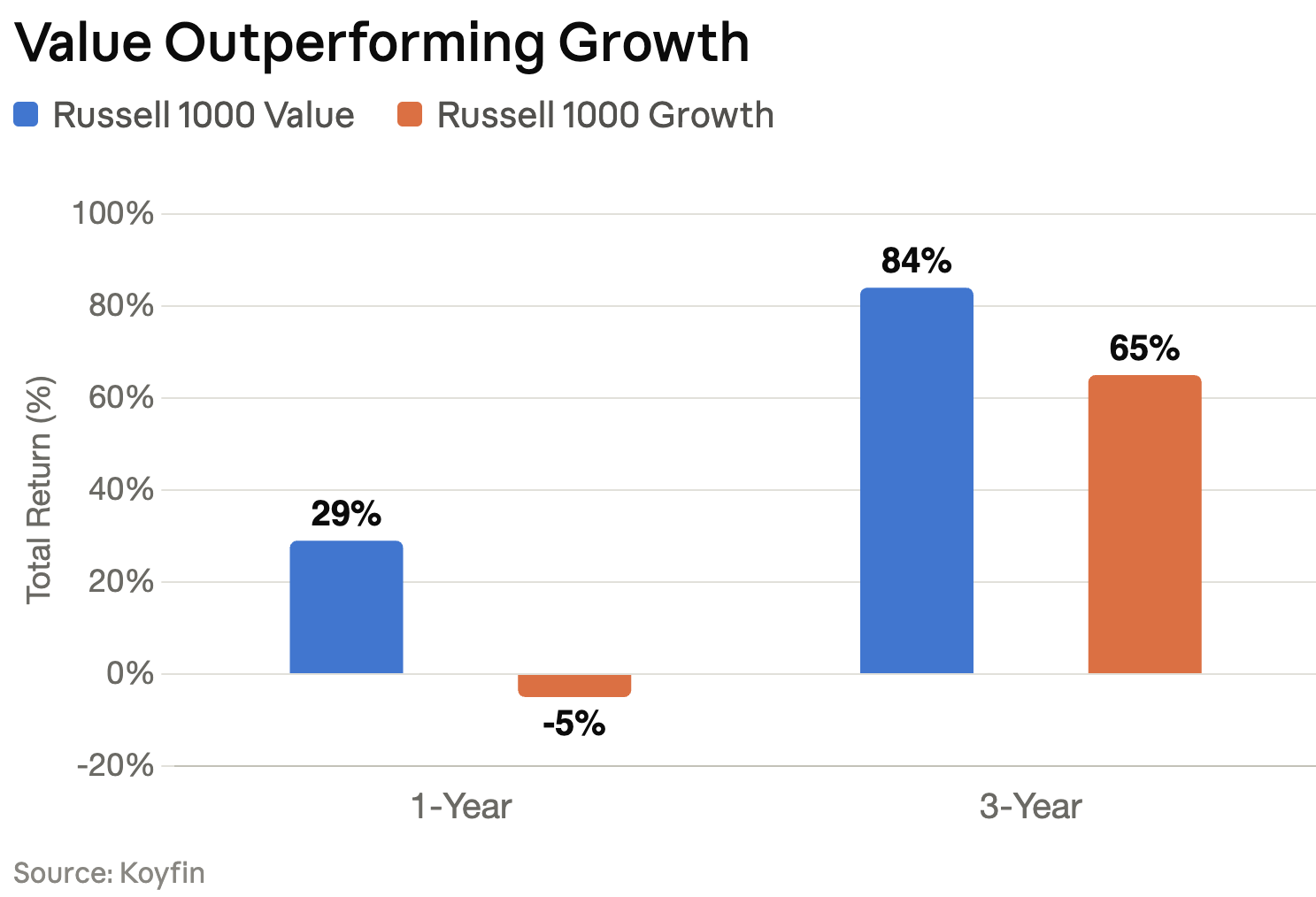
The Cyclical Waves Of Growth vs Value Styles
The growth/value performance difference is nothing new and can last for decades. As shown in the chart below, over the last rolling five years, the performance drubbing by growth stocks over value stocks has even eclipsed the early 2000 dot-com era bubble level.
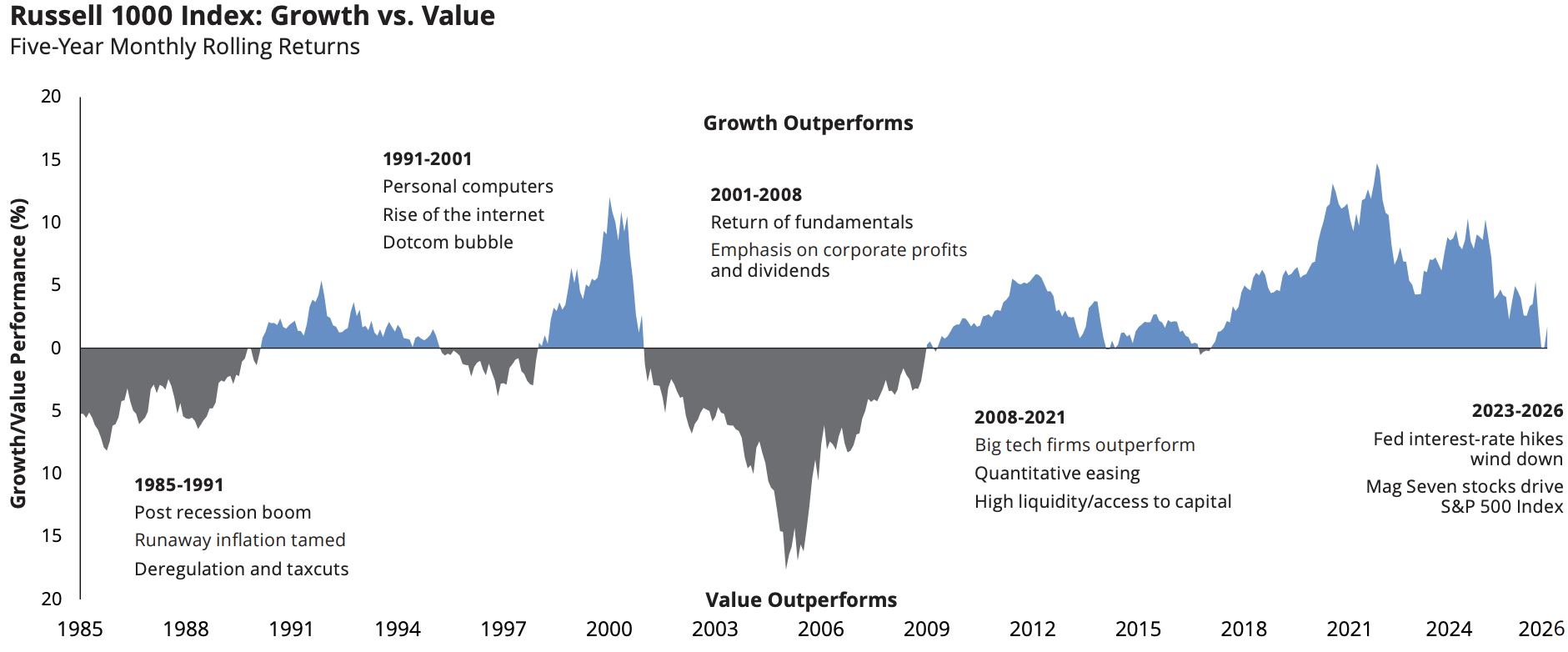
Source: Hartford Funds
What’s In Your Portfolio? Composition Matters
Given this value/growth performance gap over time, it’s important to look below the market surface to understand what drives this performance divergence. The sectors with the highest weights typically fuel index performance over time.
As the table below shows, the technology sector at over 50% of the Russell 1000 Growth index is by far the largest growth industry. Plus, the three growth sectors combine for 77% of the total growth index. Conversely, these growth sectors only make up a third of the value index which holds significantly more exposure in the economically sensitive (cyclical) and stable defensive areas.
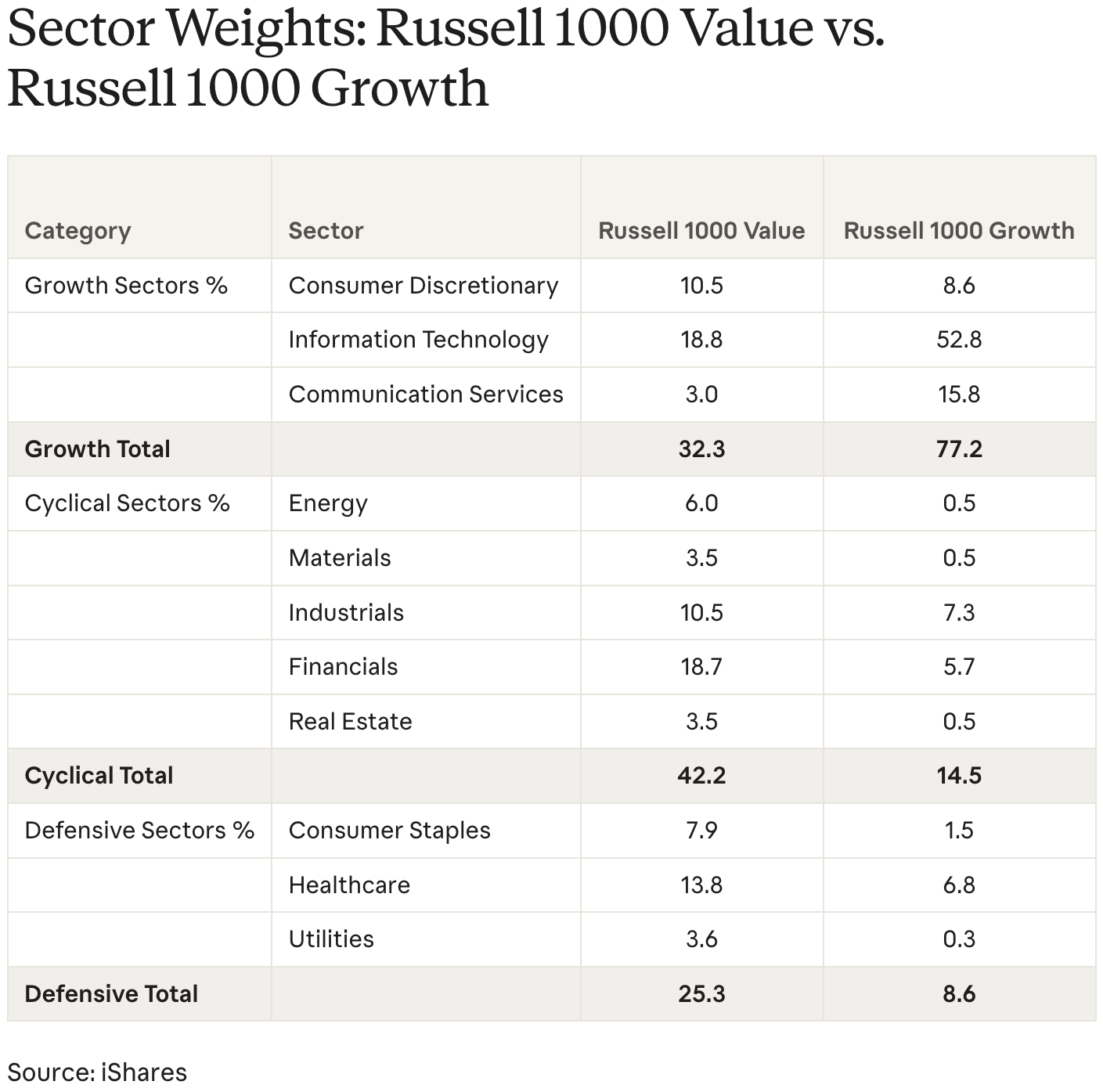
Volatility Creates Opportunity. Volatility should continue as investors weigh the implications of elections results, future Federal Reserve decisions, AI investment while market narratives change constantly. The current stock market regime teaches us the importance of knowing what you own and understand whether there may be unintended and unknown concentrations that could potentially capsize a portfolio.
Come high or rough waters, disciplined, style-aware investors will be best positioned to navigate the chop while prevailing when the markets swell upward again.
Fair Winds And Following Seas
David Hone, CFA